At first glance, Class Act may appear to be a deceptively simple project – particularly if one has only experienced a single showcase. Yet behind the performances lies an extraordinary depth of collaboration, creativity and commitment.
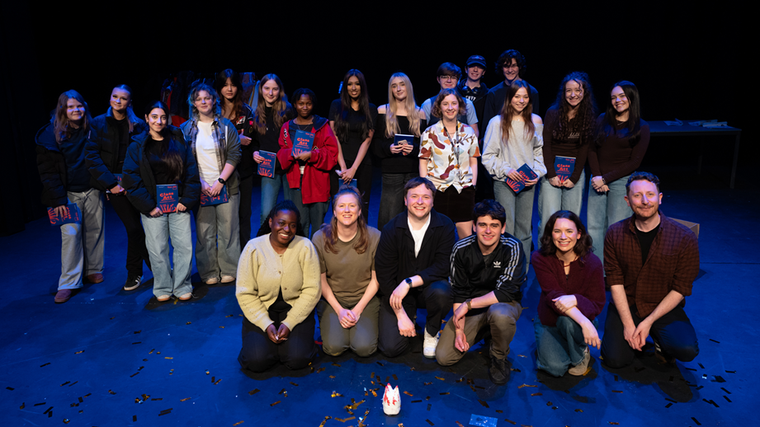
FACTS and FIGURES
- 1 amazing composer, sound designer and performer, multi-instrumentalist – Oğuz Kaplangı created a live, on-stage soundtrack for all 4 showcases of the project
- 2 workshop days at the Traverse and Citizens Theatres offering professional insights into theatre-making
- 5 professional directors brought the young people's plays to life (Gareth Nicholls, Jordan Blackwood, Fiona MacKinnon, Ben Standish & Shilpa T-Hyland)
- 6 new artists were recruited and trained to join the team of 9 Class Act facilitators
- 14 months from first contact with the schools until the final showcases at the Traverse and Citizens Theatres
- 15 professional actors worked on the short plays throughout the dramaturgy days, rehearsals and showcases
- 33 scripts in total published as a joint Anthology; 16 from Edinburgh schools and 17 from Glasgow schools.
- 64 creative writing workshops in 8 schools in Edinburgh and Glasgow
- 160 young writers and participants
- 100s of photographs and video recordings of showcases in Edinburgh and Glasgow
- 300 published anthologies
- Numerous supporters, funders, technical and artistic contributors, and administrative staff made Class Act 2025-26 possible.
UNPACKING THEATRE
Class Act extends far beyond writing sessions in schools. It offers immersive theatre experiences designed to deepen participants’ understanding of performance spaces, stagecraft and the many professions that bring contemporary theatre to life.
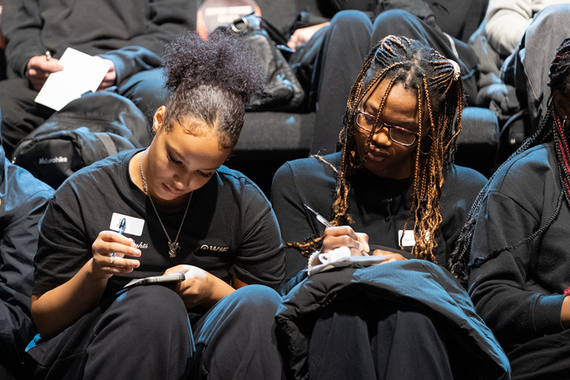
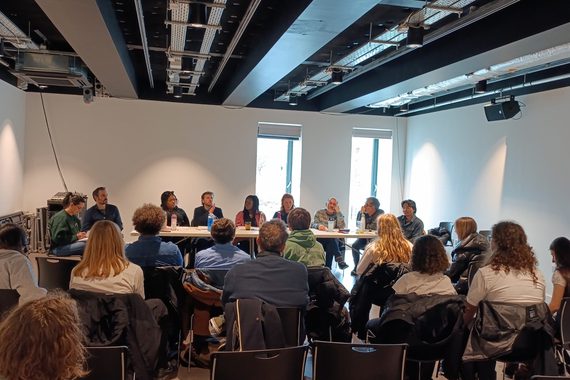
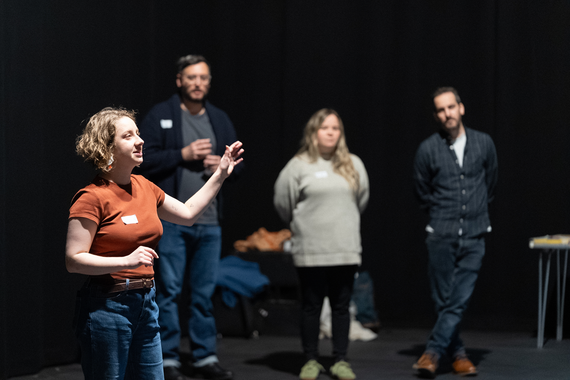
In October 2025, the Traverse Theatre and Citizens Theatre welcomed young writers into their buildings for guided tours and a range of directing, playwriting and technical masterclasses. This was followed by further workshops in February 2026 focusing on script development and dramaturgy.
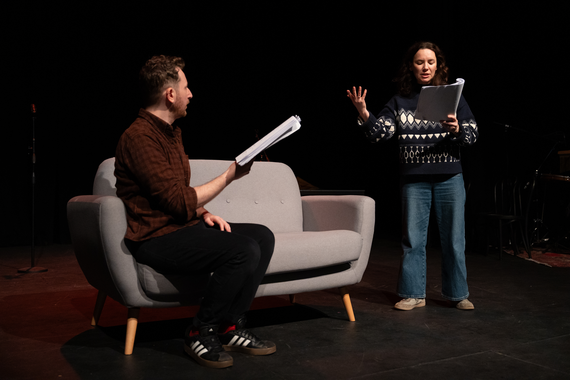
In these sessions professional actors, directors and composers came together to read the young writers’ plays for the first time and discuss them directly with their authors. Across these sessions, the plays were explored in terms of tone, characterisation, staging, costume and technical possibilities, allowing young writers to see how their ideas might be realised on stage.
WHAT YOUNG PLAYWRIGHTS WRITE ABOUT?
In Edinburgh, we had stories about cursed TikTok, suffragettes on the run and a desperate fake dentist; tales of possessed deer out for murder and one of a spooky caveman wreaking havoc in the school halls, drama of queer-aristocracy and a vampire on a mission, ghost stories and love stories; political thrillers, absurdist thrillers and rap thrillers!
In Glasgow, we had stories about criminal biscuits, evil head teachers, and intriguing mythical half-human-half-sheep; tales of blood-thirsty zombies, of well-meaning ghosts and friendly aliens; absurdist thrillers, Christmas thrillers and happy-ending adoption and neurodivergent drama.
You name it, we have it. And every single word, every single idea, every single character was created by the young people of Scotland, and subsequently published in the Class Act Anthology and presented on the stages of the Traverse and Citizens Theatres.
THEATRE MARATHON
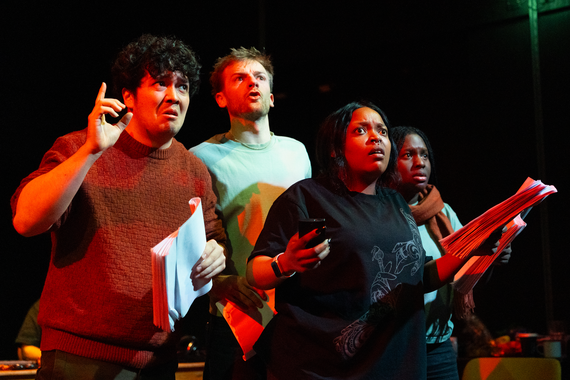
Both showcases unfolded as exhilarating, time-compressed marathons of theatrical ingenuity. From Edinburgh came sixteen plays and a song, created by students of Craigroyston Community High School, Royal High School, Trinity Academy and Tynecastle High School. Glasgow answered in kind with seventeen vibrant pieces from Bannerman High School, Govan High School, Holyrood Secondary School and Notre Dame High School. Each city’s programme was deftly shaped and brought to life by its own dedicated creative team.
In Edinburgh, directors Fiona MacKinnon and Jordan Blackwood led the charge, while in Glasgow the helm was shared by Ben Standish and Shilpa T-Hyland. Across both cities, the vision was guided by Artistic Director Gareth Nicholls, whose overarching structure unified these diverse works into compelling stage compositions. Remarkably, all of this was achieved within just two and a half days of intensive rehearsal, a testament to the commitment and flair of the outstanding young performers.
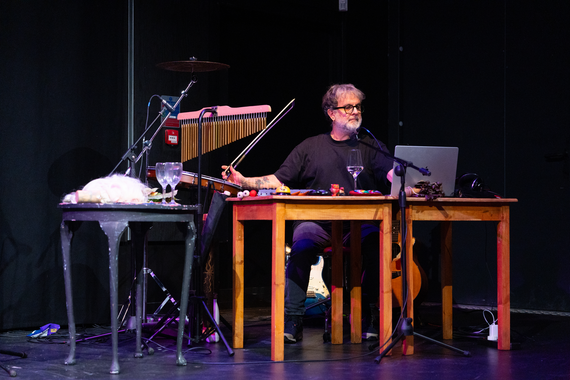
Binding the entire experience together was composer, sound designer and multi-instrumentalist Oğuz Kaplangı, who performed a live, on-stage soundtrack across all four showcase evenings, lending a dynamic and immersive musical pulse to every piece.
The productions were further elevated by the expert technical support and lighting design provided by the teams at the Traverse Theatre and Citizens Theatre, whose craftsmanship ensured that each moment shone with clarity and theatrical effectiveness.
FEEDBACK
It is always very touching getting the first emotional reactions, delights and comments from participants, their teachers and parents after the showcases.
This year, we also invited some of the experts who were key in the early days of Class Act in the 1990s and early 2000s. We are thrilled to share some of their comments with you...
In Edinburgh, we had the honour to have as an audience member of the final showcase this year, Jane Ellis – the lady, who developed the Writers About/ Class Act project under the artistic directorship of Ian Brown and with the coordination and contribution of Jenny Wilson in 1990. She expressed: “What is so extraordinary about Class Act is the way it has been taken by other people and progressed into such an amazing thing. We just did a little thing. And people have taken it. And it’s working. The young writers are still coming up with original thoughts that are always fresh and relevant, and having an amazing time and experience in the theatre.”
Katherine Mendelsohn, the Traverse Theatre literary manager and Class Act director in the early 2000s, visited the Glasgow showcase and sent us a message expressing: “I can’t tell you how much it meant to me seeing Class Act. And that moment where the writers get their anthology is always magic. Congratulations on all your work making it happen. It moved me so much seeing it again. Great cast, too, I had a whale of a time. As did those writers”.
THANKS AND GOODBYES
We would like to recognise one of Class Act 2025–26’s key contributors, Becca King. This year’s showcases marked her final week as Class Act Coordinator, coinciding with the first Glasgow edition of the project in over a decade and the programme’s thirty-sixth year at the Traverse Theatre.
Reflecting on her time, Becca wrote:
“Class Act is one of those special projects. You’re so lucky if you get to work on it. Brilliant artists and practitioners come together to inspire, respect and celebrate the creativity of young people. The lasting impact cannot be underestimated, whether these young people become artists or not they leave feeling more confident, able to express themselves creatively, and hopefully knowing that arts spaces are for them.
It has been an absolute pleasure to steer this project in its most recent iterations and to engage with young people across the country. I will remain a fierce supporter of Class Act and can’t wait to see its next direction under someone else’s stewardship”
FINAL REFLECTION
As a Traverse Theatre trainee, supporting the project through backstage management and props creation, I had the privilege of witnessing this process from within – where every detail, however small, contributes to the final moment on stage. Class Act 2025-26 stands as a powerful reminder that theatre is, at its heart, a collective endeavour: a meeting point of young imagination and professional craft, of mentorship and discovery, of structure and spontaneity. What begins as an idea in a classroom, grows, through collaboration, care and creative trust into something shared, public and unforgettable. As this year’s journey draws to a close, it leaves behind not only an extraordinary body of work, but a new generation of voices – confident, original and ready to be heard.
- Maria Kroupnik, Newcastle University
The Arts and Humanities Research Council [grant number AH/R012415/1] support the placement and research project.