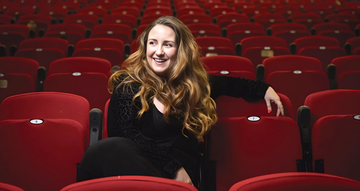
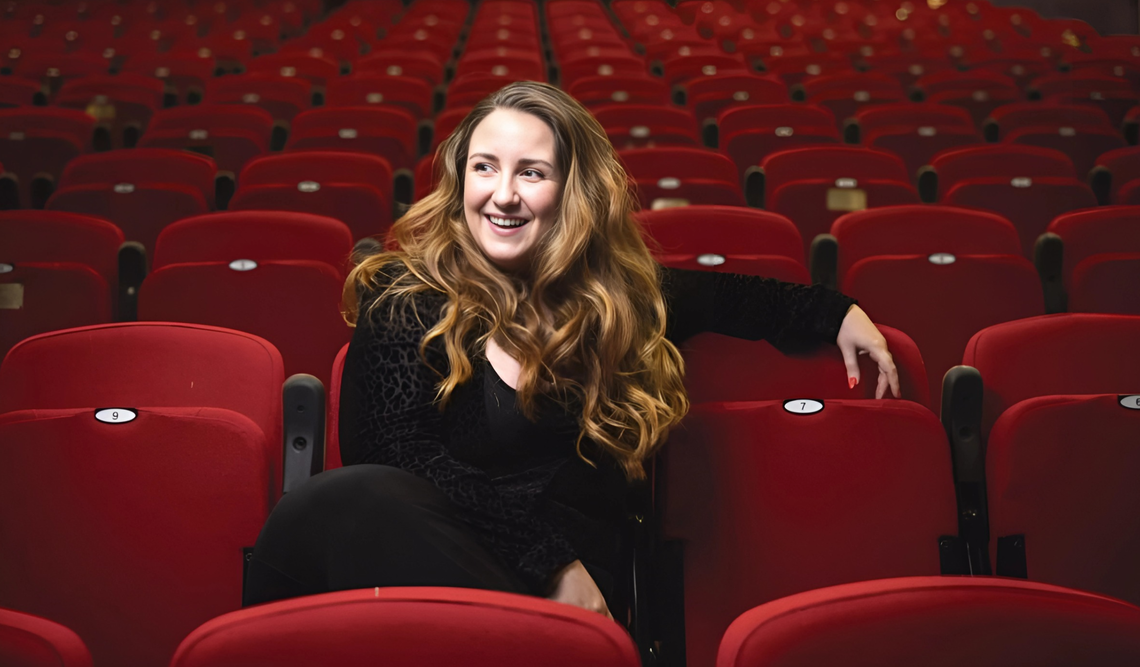
Playwright and screenwriter, Ciara Elizabeth Smyth, has been in residence with the Traverse since February 2025 through the Playwrights '73 Award. One year in, we checked in with her to hear more about her writing journey so far with the Traverse.
You are now a year into your attachment and working on draft 3 of your play. What research or existing work has inspired you so far?
My research has been about immersion in domestic family dramas and narratives that explore intimacy, power and emotional inheritance. Plays such as The Brightening Air by Conor McPherson and Till the Stars Come Down by Beth Steel have been influential in their attention to the quiet repetitions, consequential plot and low-level violences of family life.
In prose, Carmen Maria Machado’s In the Dream House has been an important reference point in terms of perspective and the way form can be used to refract emotional truth. Tony Tulathimutte’s Rejection has also been a key influence, particularly in its examination of ego, grievance and the internal mythologies people construct in order to survive emotional scarcity and perceived injustice. Alongside this, Camus’ The Stranger continues to inform my thinking around emotional detachment, moral alienation and what happens to the self when faith in others collapses.
Together, these works have reinforced my desire to capture the cumulative weight of unmet needs, the slow accrual of emotional bankruptcy, and the damage done when trust in other people erodes over time.
How has receiving dramaturgical support from Gareth Nicholls and Zinnie Harris helped to continue shaping your ideas?
The dramaturgical support from Gareth and Zinnie has been invaluable, particularly in helping me step back and consider how an audience first meets the play. Their notes pushed me to interrogate not just what I was interested in formally, but whether the form was serving the story or obscuring it. Recently, in conversation with Gareth, it became clear that while the structure was intellectually interesting, it was repetitive in a static way and it was beginning to get in the way of emotional clarity.
It also helped me articulate what was most compelling to me about the piece, which led directly to the re-titling of the play. Conversations with them sharpened my focus on the family dynamic itself, a family driven by ego, mistrust and lies, and the slow, almost invisible accumulation of damage over time. Their input consistently brought me back to the audience’s experience, which has been crucial in refining both tone and structure, and in giving me confidence to shed material that was no longer essential.
How do you feel about your next draft, and what tends to be your writing approach at this stage of the process?
I feel wildly energised going into the next draft. At this point (in my head), the piece feels clearer in its intentions, which makes it easier to be decisive and ruthless. I’m less concerned with holding onto interesting ideas for their own sake and more focused on whether each choice is doing the work the story requires.
My approach at this stage is about consolidation and pressure-testing. I’m concentrating on plot, character arcs, revelations and themes, and ensuring that the form is in service of those elements rather than leading them. I feel confident in the characters, their relationships and the circumstances of the play, and although there is more development to go, much of my attention now is on urgency. Why are we meeting these characters on this particular day? What happens on this day that cannot be undone, that shifts something fundamentally? Those questions are driving the next draft.
Every project demands a slightly different process, and for this one it feels like the time to commit fully to the emotional engine of the play, to follow the setup through, and to make sure the structure is earning its place and not hampering audience experience.
With thanks to the Playwrights ’73 Scheme in association with the Peggy Ramsay Foundation and the Maria Bjornson Memorial Fund.